INK+OXYGEN #1: Adler
After my first gallery exhibition in 2023, I quietly stopped drawing. Not because it went badly—but because it went well, and I lost the courage to be…
INK+OXYGEN is an ongoing series at BOKA—short reflective essays on ideas I’m reading and how they show up in my real life, in medicine, leadership, and
creative work.
For a long time, I believed the next drawing would be the one.
Which is why what happened next caught me off guard.
After my first gallery exhibition in 2023, I mostly stopped drawing.
That show was real. It was public. It was vulnerable. My work was on the wall, hanging, lit, judged — quietly and politely — the way art always is once it leaves your hands.
Friends and colleagues came. Other physician-artists came. It was affirming, to be honest. It was beyond exciting. It was, by any external measure, what anyone would call a success.
But weeks to months afterwards, something strange happened. Something I didn’t or couldn’t have predicted. The urge to draw simply thinned out. It just like… faded.
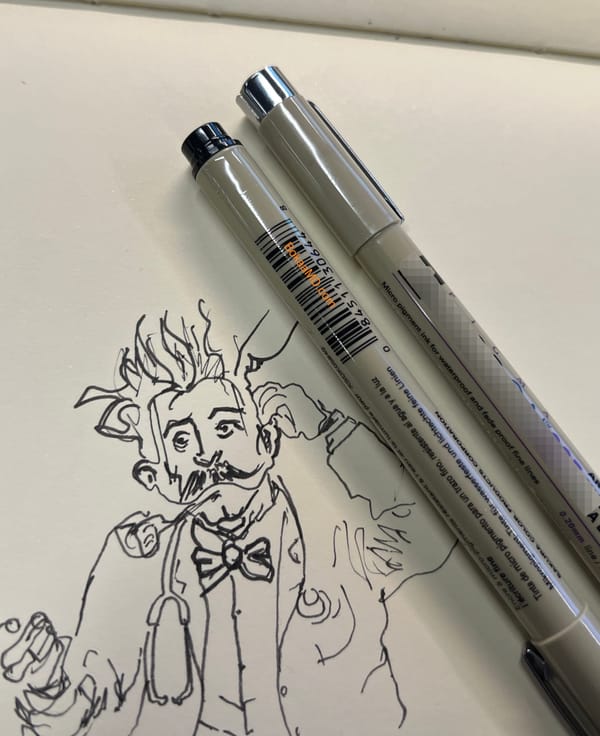
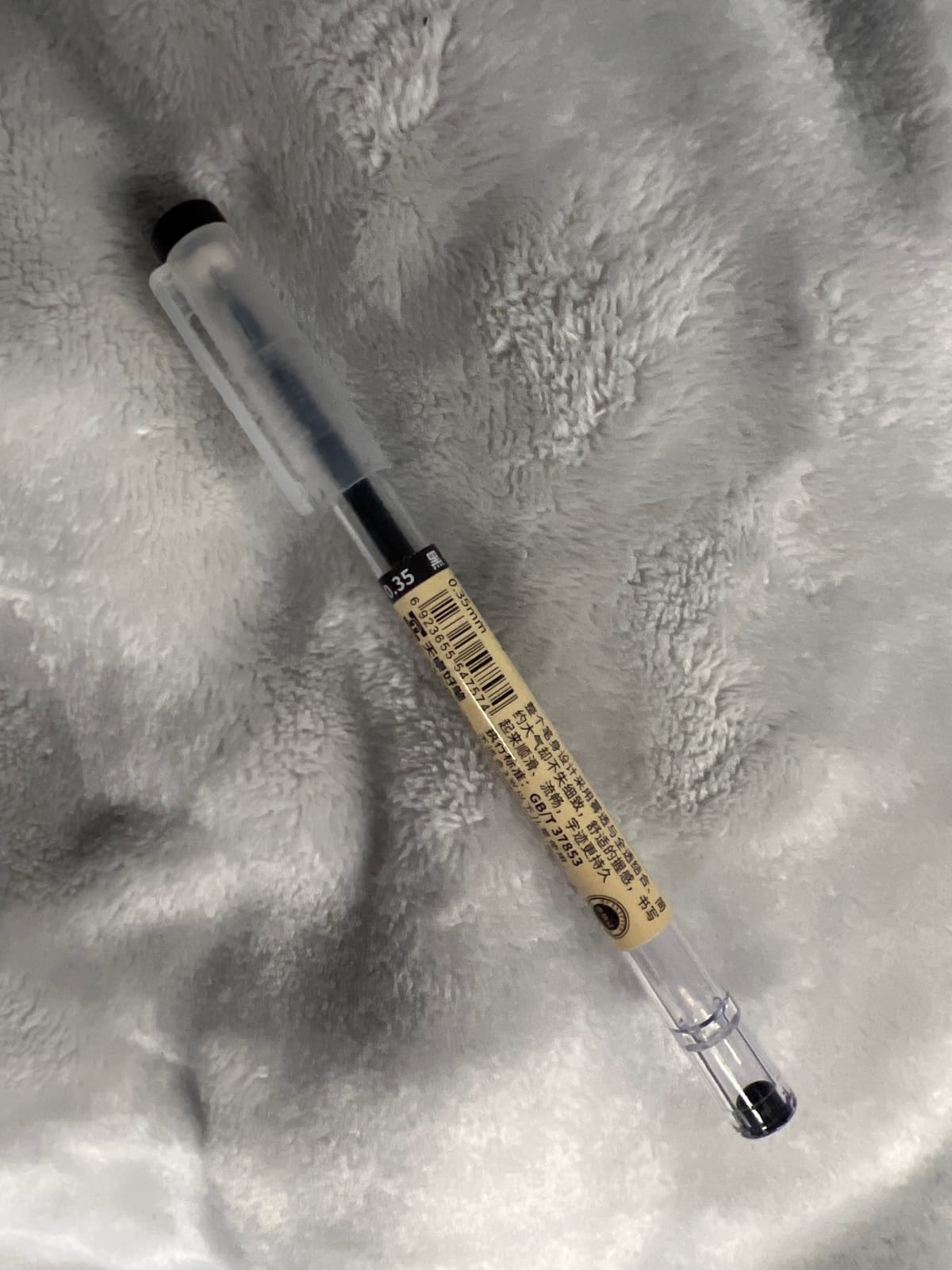
Sketchbooks remained closed longer. Pens stayed capped. And when I did sitdown to create, ink to paper felt forced, like the lines were aware they were being watched. Every mark felt like it had to justify itself. It wasn’t relaxing. It wasn’t freeing.
Drawing for me has always been oxygen. A breath of fresh air. Inspiration, motivation, creativity — it all blends and mashes together into energy, and that energy becomes movement: pen, ink, paper.
But somewhere in that stretch after the show, I wasn’t drawing anymore.
I realized I was auditioning.
At the time, I told myself my usual itch to draw was gone because I was too busy. Which was true. The busyness never stops. Medicine. Family life with kids. Everything. I told myself it was a phase, and that made me feel better.
But I didn’t realize I had quietly shifted from creating to protecting myself.
I lost the courage to be imperfect.
I didn’t name that emotion at first because I didn’t have the right language for it. This year, though, because of a book I read called The Courage to Be Disliked, I do.
The book is written as a dialogue by Ichiro Kishimi and Fumitake Koga, but underneath it is really a conversation about Alfred Adler’s psychology.
One of the core ideas in the book is this: trauma, as we usually describe it,is not the thing that determines our behavior. It’s the story we decide to tell about it. Or as Adler says in the book: “Trauma does not exist.”
That sentence alone is enough to make anyone tense.
Adler isn’t denying that painful things like loss, harm, and failure happen. He’s arguing that we don’t act because bad things happened in our past. We act because of the meaning we assign to those things in the present.
We choose goals, often unconsciously, and then arrange our narratives to serve them. In plain language: your past doesn’t control you. Your interpretation does.
Last night, some colleagues and I ended up in one of those late conversations that starts with one thing and then keeps widening. A political history discussion after dinner somehow drifted into psychology, and then into that word everyone uses: trauma.
At some point I said something about “inner trauma,” and my physician-partner immediately said, “Trauma does not exist.” He started talking about Adlerian psychology and this book he wanted me to read.
I stopped him mid-sentence and mentioned The Courage to Be Disliked.
“You’ve read that?” he said, genuinely surprised.
“Yes,” I said. And more importantly, I’ve been living inside the question it asks.
Because if Adler is right, then my post-gallery creative stall wasn’t because the exhibition “took something out of me.” It’s probably because I quietly chose a new goal: don’t look foolish again.
Once the work was public, drawing stopped being a place of oxygen and became a place of risk. Every blank page carried the weight of comparison — to the pieces on the wall, to the version of myself who had already “proven” something. The ink wasn’t allowed to wander anymore. It had to perform.
And performance can be suffocating.
Adler would say this wasn’t trauma. It was a choice. Not a conscious one or a malicious one, but a protective one.
I decided, without realizing it, that not drawing was safer than drawing badly after being seen. That maintaining an identity was more important than continuing a practice. That it was better to preserve a moment than to risk diluting it through iteration.
That same pattern shows up everywhere.
In medicine, I see it when a physician stops asking questions because they’re afraid of looking inexperienced. In leadership, when someone clings to a past win instead of trying something new. In the workplace, when maintaining an image matters more than repair.
In all of it, the cost is oxygen.
Creativity, like physiology, depends on flow. On repetition. On small adjustments made in real time. You don’t get stronger lungs by holding your breath. You don’t get better art by freezing it at the high note of display.
The gallery showing mattered. I’m proud of it. It was real and meaningful. But it was never supposed to be a finish line.
About a year after the exhibition, I told my best friend about this confusing feeling — the no further urge to create — and he said something simple and precise.
Draw for yourself. Don’t post. Don’t share. Just draw.
My buddy and Adler helped me see the same thing from two angles. The goal can’t be “protect what I was.” It has to be “keep participating.”
That’s what this series is.
INK+OXYGEN is me returning to practice with courage. Using books, essays, philosophy — whatever — not as intellectualism, but as tools I test in real life. In the ICU. In leadership conversations. In my sketchbook. In the uncomfortable spaces where growth actually happens.
INK is where I let myself be imperfect again. OXYGEN is the reminder that staying alive means staying in motion and iterating.
So I’m drawing again. Not for an audience. Not for a wall. Just to keep the lines moving. Some of them will be bad. Some of them might surprise me. Maybe I’ll post along the way, who knows.
That’s the deal.
If Adler is right, then nothing about 2023 took my motivation away. I set it down because I was afraid of being seen mid-process.
And I can choose differently now.
This is the re-start. Not a comeback. Not a declaration. Just another stroke of the pen.
The next line.
Comments welcome 🙏
This essay is part of INK+OXYGEN, an ongoing series at BOKA.
The full archive and original home for this work lives here on BOKA at BokaMD.com. Selected pieces are also shared on my Substack at bokaMD.substack.com.